Local guide February 18, 2026 · 8 min read
Where Does Your Junk Actually Go? Inside Central Valley Disposal
Four counties, four separate systems, and one very good question to ask any hauler before you hire them. Here is where a load from your address actually ends up.
By Jeremy Bowers, owner of Fresno Junk Haulers
Most people never think about where a load goes after it leaves the driveway, and that is reasonable — it is the whole point of hiring someone. But it is worth knowing roughly how the system works here, for two reasons. It explains why some items cost more than others, and it gives you one very good question to ask before you hire anybody.
Four counties, four separate systems
Our service area spans four counties, and they do not share a disposal network. Where your load goes depends entirely on which county your address sits in.
Fresno County operates the American Avenue Disposal Site near the City of San Joaquin, which has taken public and commercial loads since 1992. Waste from within the City of Fresno is first processed at the Cedar Avenue Recycling and Transfer Station before moving to American Avenue for final disposal, and there is a second transfer station on Rice Road. Clovis, Sanger, Selma, Kerman, Parlier, Kingsburg, Reedley, Orange Cove and Mendota all sit within this system.
Madera County runs Fairmead Landfill at 21739 Road 19 in Chowchilla — a completely separate operation with its own fee schedule. It opens Monday to Friday 8:00 to 4:30 and Saturday 7:00 to 2:30, closed Sundays, and it also handles the county’s household hazardous waste. Madera and Chowchilla loads go here.
Kings County uses the Kings Waste and Recycling Authority at 7803 E. Hanford-Armona Road, a joint powers authority formed by Hanford, Lemoore, Corcoran and the unincorporated county. It runs Monday to Saturday, 7:00 to 4:00.
Tulare County operates two active landfills and six transfer stations. The Visalia Landfill at 8614 Avenue 328 is the main one, opening Monday to Friday at 6:00 in the morning — noticeably earlier than any of the Fresno County sites. Visalia and Dinuba fall here.
If you were planning a self-haul, that is the practical takeaway: the facility, the hours and the fees all depend on your county, and a Fresno resident’s assumptions do not transfer to Madera or Tulare.
But most of a load never reaches a landfill
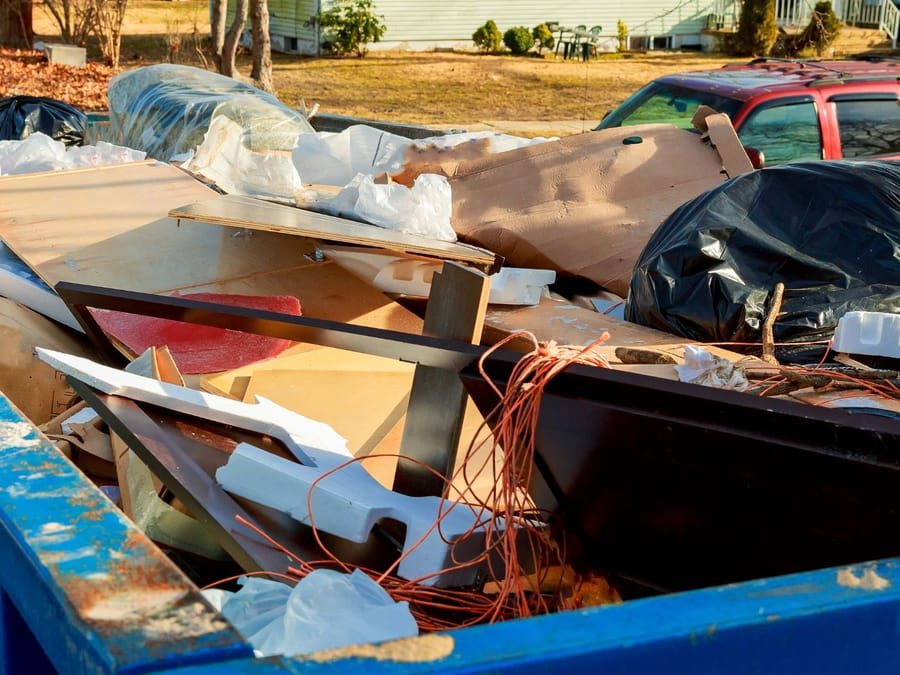
The landfill is the last resort, not the default. A typical mixed household load gets separated several ways before anything is buried.
Donation first. Structurally sound furniture, working appliances, usable tools, children’s gear and household goods go to local donation centers. Realistically this is where honesty matters: charities turn away anything torn, water-damaged, mold-affected or stored outdoors, and a Fresno garage through several summers is unkind to fabric, foam and glue. But a lot more is saveable than people assume.
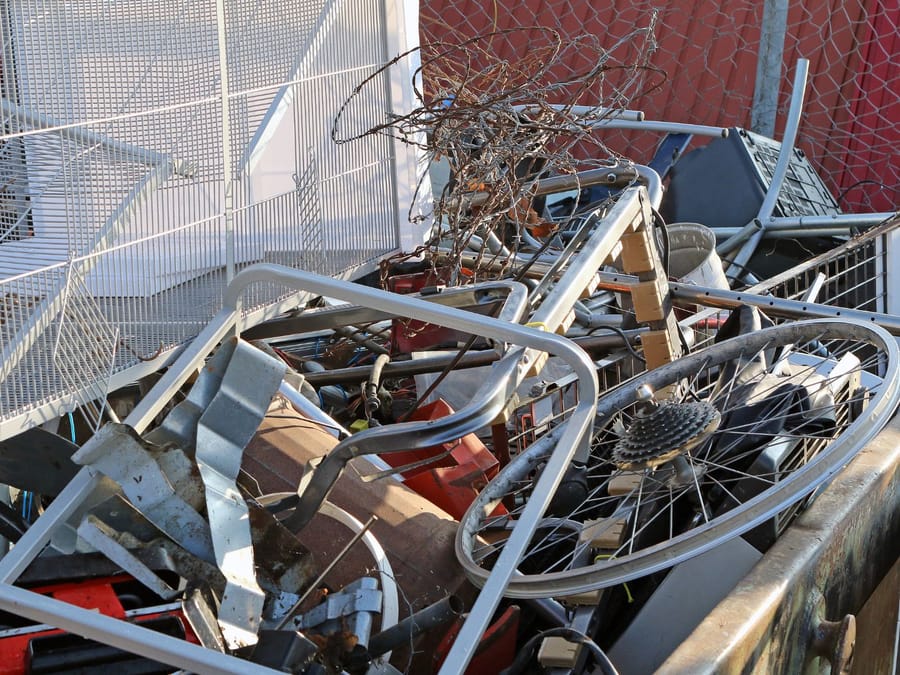
Metal to a scrap recycler. Steel, aluminum, copper, appliance shells, fencing, irrigation pipe, bed frames. Metal is worth separating on any load that has a decent quantity of it, because a scrap recycler is a different destination from a landfill scale — and on a large clean load it can reduce the cost.
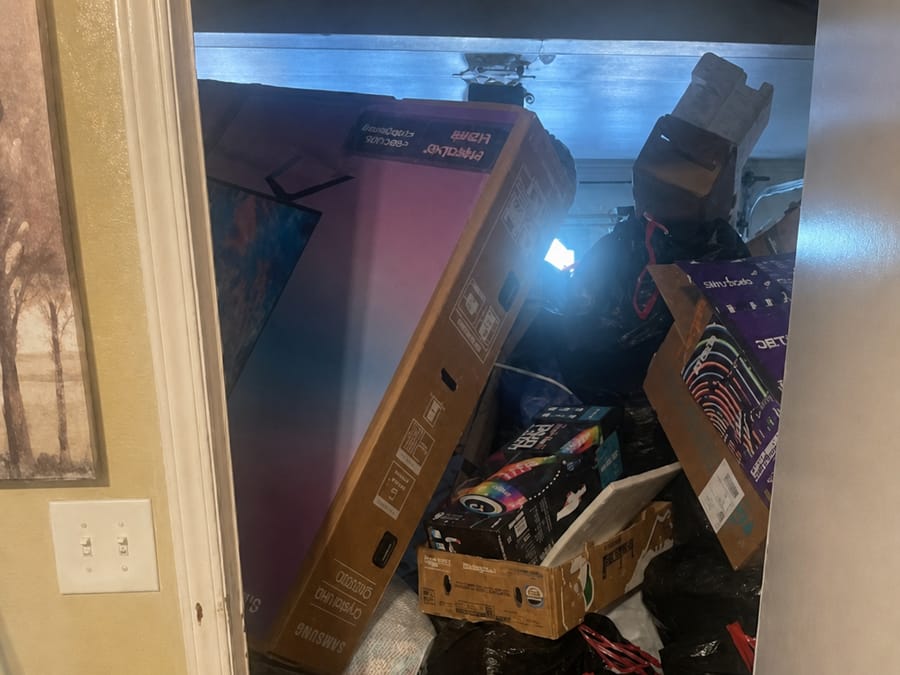
Electronics to a certified e-waste processor. This is not optional in California. Anything with a screen or a circuit board is legally excluded from ordinary landfill, and CRT televisions in particular contain several pounds of leaded glass. That is also why a big old CRT costs $60 to $110 to dispose of while a flat panel of the same screen size is $40 to $75.
Mattresses through the state program. California runs a mandatory mattress recycling scheme funded by a per-unit fee. Mattresses go to a facility that strips them for steel springs, foam, fiber and timber — roughly three quarters of a typical mattress is recoverable. That fee is why a mattress costs more to remove than its bulk suggests.
Green waste to composting. Branches, brush, prunings, clippings and leaf litter go to a composting facility rather than being buried, where one is available. This is the one where you can directly influence the cost: a clean green-only pile is accepted at composting rates, but add plastic sheeting, treated timber or a couple of bin bags and the entire load gets reclassified and charged at general disposal rates.
Tires to a dedicated processor. Banned from ordinary landfill in California, which is why they are priced per tire.
Only what is genuinely waste after all of that reaches a transfer station, with a weigh ticket attached.
What nobody can take, and where it goes instead
Some material is legally excluded from any hauler’s truck. Wet paint, solvents, thinners, pesticides, pool chemicals, motor oil, antifreeze, propane cylinders, car batteries, ammunition and medical waste.
This is not a service limitation — no legitimate hauler in California will carry these. Each county runs household hazardous waste disposal for residents, and Madera County handles it at Fairmead. If you are clearing a garage, expect to find several items on that list, and plan a separate trip for them.
The question worth asking
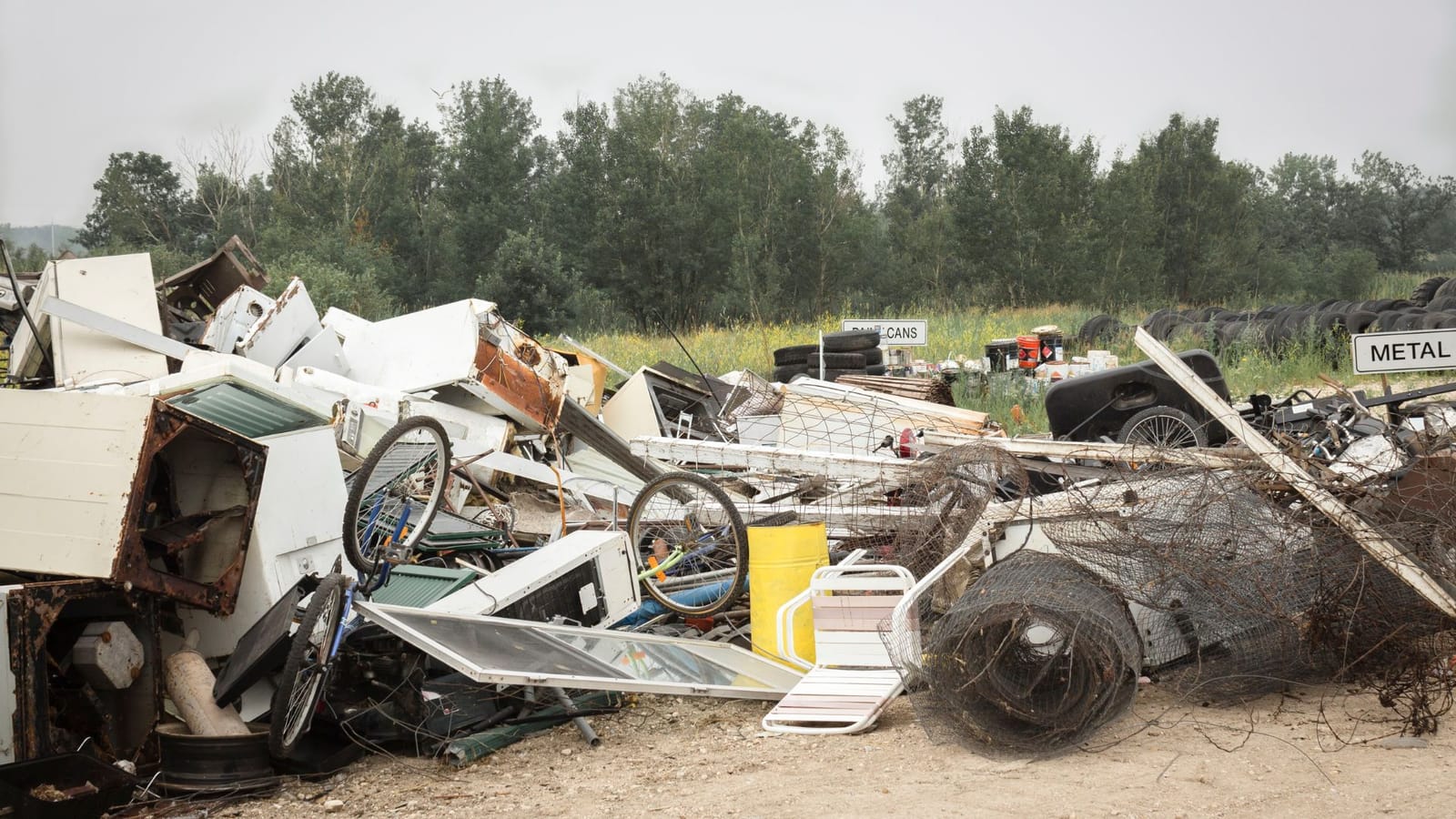
Illegal dumping is a genuine and visible problem across Fresno County. The piles that appear on rural roads, canal banks and empty lots did not arrive by accident, and a meaningful share of them started as somebody hiring the cheapest quote without asking what happened next.
So ask: which facility does my load go to?
A legitimate hauler names it immediately and can produce a weigh ticket if you want one. Hesitation or vagueness on that question is the clearest warning sign available, and it is worth taking seriously — because when dumped material gets traced back to a property, the conversation does not always end with the driver.
If material has been dumped on your land, report it to the county before having it cleared. It takes a few minutes, and once the pile is gone there is nothing left for anyone to act on.
Why this shows up in your quote
Understanding the system explains the pricing that otherwise looks arbitrary. A refrigerator costs more than a washer because refrigerant must be recovered by a certified technician first. A mattress costs more than its bulk because of the state fee. A CRT costs more than a flat panel because of leaded glass and weight. A concrete load costs more than a furniture load of the same size because it is charged by the tonne.
None of those are markups. They are the actual cost of doing it properly, quoted inside the number rather than added at the end — which is also, incidentally, how you can tell the difference between a quote and a guess.
Every figure above is a typical range for the Fresno area, not a quote. Prices may vary depending on the condition of the item. Call for a firm number on your actual load.
Need this done rather than read about?
Free on-site estimate, flat price agreed before anything is lifted, and the area swept before we leave. Same-day slots are available most weeks.
Areas this applies to
Quick answers
How do I report illegal dumping in Fresno County?
Fresno County Public Works runs reporting for dumping on county roads and rural land, and the City of Fresno handles it within city limits. Report it before you have the pile cleared — once the material is gone, so is the evidence anyone could act on.
What should I ask a hauler about disposal?
Just one question: which facility does my load go to? A legitimate hauler names it without hesitating and can produce a weigh ticket. Vagueness on that question is the clearest warning sign there is, and it matters because a load traced back to your property is not automatically the driver's problem.